How to Sleep Cooler at Night: 12 Tips for Hot Sleepers
A practical guide for hot sleepers: cool the room, rethink bedding and habits, then target the sleep surface if you still overheat at night.
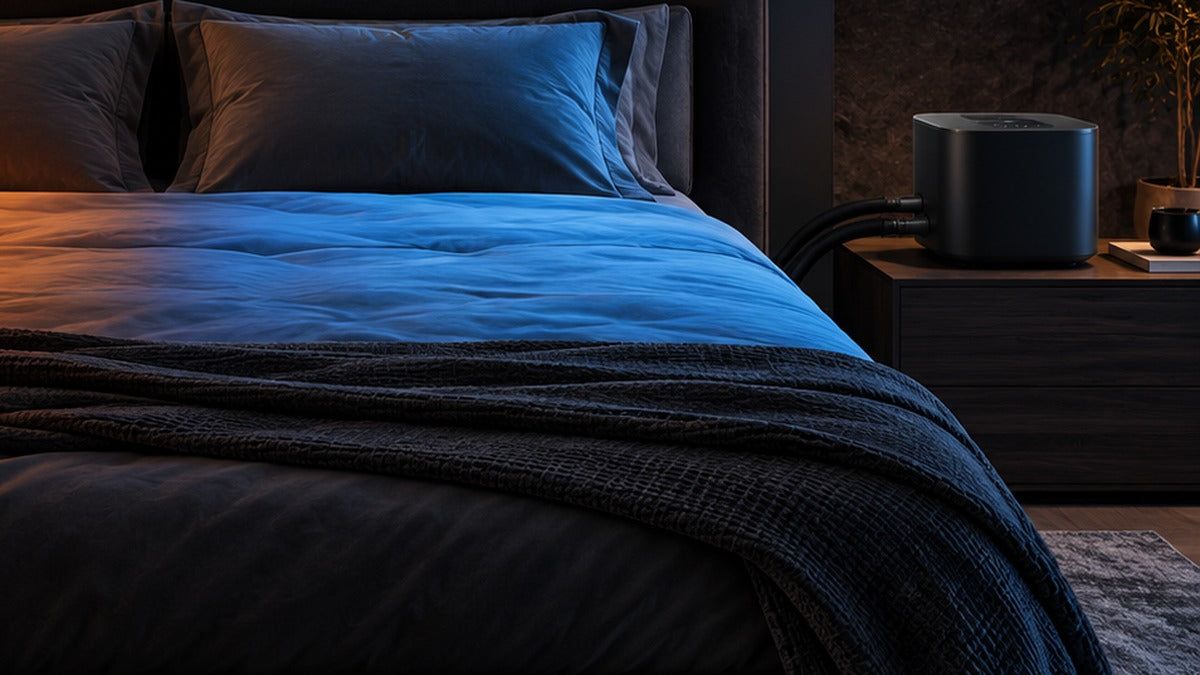
If you are a hot sleeper, waking up warm does not automatically mean you need a colder house. Heat can build up in the room, the bedding and the small microclimate around your body.
Start simple. Fix the room first, then the bedding and evening routine. If you still sleep hot, target the surface you actually sleep on.
Why do some people sleep hot?
There is no single cause. A warm bedroom, heavy bedding, heat-retaining foam, alcohol, late exercise, medication, hormones and individual differences in thermoregulation can all change how warm you feel at night.
Sleep and body temperature are closely linked. Core body temperature normally falls as sleep approaches and during sleep, which is one reason an overheated sleep environment can feel uncomfortable.
1. Keep the bedroom comfortably cool
A cooler room is a good baseline, but there is no universal perfect thermostat setting. Start where you feel comfortable and change it gradually rather than chasing a single number.
2. Move the air
A ceiling fan, bedside fan or open window can help move warm air away from the bed when conditions allow.
3. Block heat before bedtime
Close blinds or curtains during the hottest part of the day. It is easier to sleep in a room that never became excessively warm.
4. Use breathable sheets
Light cotton, linen and crisp percale are popular with hot sleepers because they feel less insulating than heavy brushed fabrics.
5. Reduce duvet weight
Use lighter layers that can be removed independently. If two people share the bed, separate duvets can stop one sleeper's temperature preference controlling the other person's night.
6. Pay attention to the mattress
Some mattresses and thick foam toppers hold more heat close to the body. Before replacing the mattress, consider whether bedding or an active bed cooling system could address the temperature problem while preserving the mattress you already own.
7. Keep sleepwear light
Choose lightweight, breathable sleepwear, or fewer layers if that is comfortable for you.
8. Time showers and baths earlier
A warm shower or bath before bed can be relaxing. Give yourself enough time afterward to cool down naturally before getting under the covers.
9. Watch late alcohol and heavy meals
Alcohol and large or spicy meals can make some people feel warmer or more restless at night. If you regularly wake hot, test an earlier cut-off and see whether it changes anything.
10. Move intense exercise earlier
Hard training raises body temperature for a period afterward. If late workouts leave you overheated at bedtime, try finishing earlier.
11. Separate sleeping hot from true night sweats
Being too warm because of the room or bedding is different from repeated drenching night sweats. If you regularly wake with soaked nightclothes or bedding even when the room is cool, read our guide to night sweats and sleep and consider speaking with a healthcare professional.
12. Cool the sleep surface directly
If the room and bedding are reasonable but the mattress surface still feels hot, active bed cooling is another option.
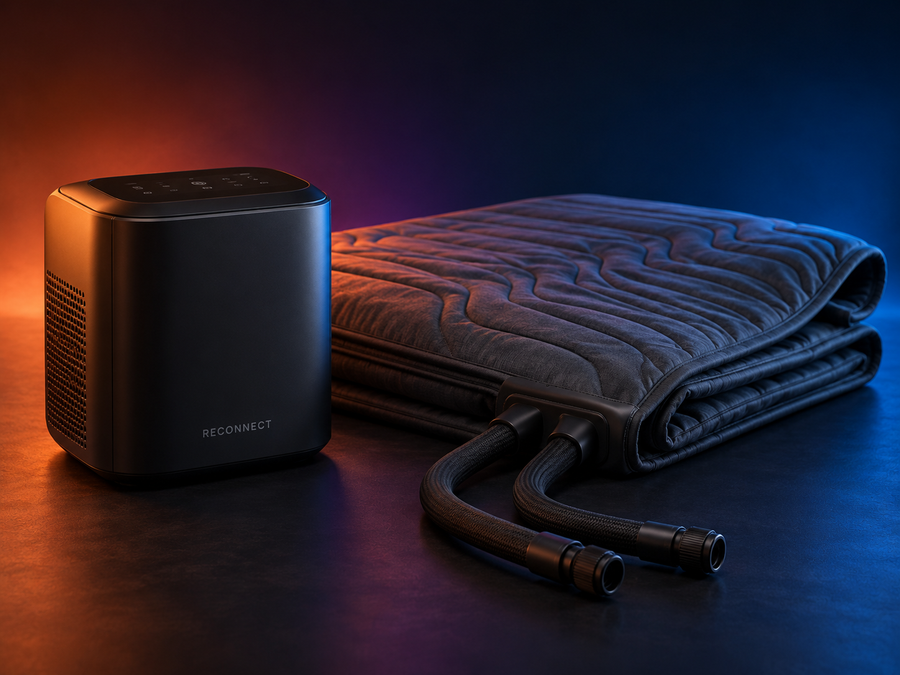
RECONNECT uses temperature-controlled water moving through a low-profile Mattress Pad beneath the fitted sheet. Cooling water settings run from 54 to 95°F (12 to 35°C). Heating settings run from 77 to 131°F (25 to 55°C). These are water settings, and the surface temperature you feel still depends on the room and bedding.
Both Queen and King are dual-zone, so two sleepers can use different settings while sharing one bed. Both sides must be in the same overall mode, cooling or heating.
What about Smart Rhythms?
If you do not want one fixed setting all night, Smart Rhythms runs a built-in nine-hour temperature programme from the Control Unit. It changes the setting automatically on a preset schedule, without sensors, sleep tracking or an app.
When to get medical advice
Occasional overheating is common. Repeated drenching night sweats are different. The NHS advises speaking with a doctor if night sweats regularly wake or worry you, particularly if they occur with symptoms such as fever, cough, diarrhoea or unexplained weight loss.
Next: compare bed cooling vs air conditioning, or see how RECONNECT works.