How to Sleep Cooler in Hot Climates: Arizona, Nevada and Beyond
Hot climates can make the room and mattress hold heat long after sunset. Learn how to cool the bedroom, keep the bed cooler and where active bed cooling fits.
If you live somewhere with long, hot summers, keeping the bedroom comfortable can be difficult even after the sun goes down. In places such as Arizona, Nevada and other parts of the American Southwest, the room may stay warm well into the night, while the mattress and bedding continue to hold heat around your body.
Short version. Start with the room, then target the bed. Air conditioning manages the bedroom. A bed cooling system or cooling mattress pad can help manage the sleep surface itself.
Why hot climates make sleep harder
Your body naturally lowers its core temperature as you prepare for sleep. A very warm bedroom can work against that process and make it harder to settle comfortably.
In hot climates, several things can work together:
- the bedroom absorbs heat during the day and releases it slowly at night
- mattresses and thick foam layers can retain body heat
- heavy bedding traps warm air around the sleeper
- two people sharing a bed add more body heat to the same sleep surface
- air conditioning cools the room, but the mattress may still feel warmer than the surrounding air
How to keep a bed cool in summer
1. Stop the room from overheating during the day
Close blinds or curtains when direct sun is strongest, especially on west-facing windows. It is much easier to cool a bedroom that never became excessively hot in the first place.
2. Use air conditioning as the baseline in extreme heat
In very hot climates, targeted bed cooling should complement the room, not replace basic climate control. RECONNECT is recommended for rooms below 86°F (30°C).
If a bedroom is regularly hotter than that, cool the room first. This matters in places such as Phoenix, Las Vegas and other desert cities where indoor temperatures can remain high overnight without air conditioning.
3. Keep bedding light and breathable
Light cotton, linen and percale sheets generally trap less heat than heavy brushed fabrics. Use layers you can remove easily instead of one very warm duvet.
4. Pre-cool the bed before you get in
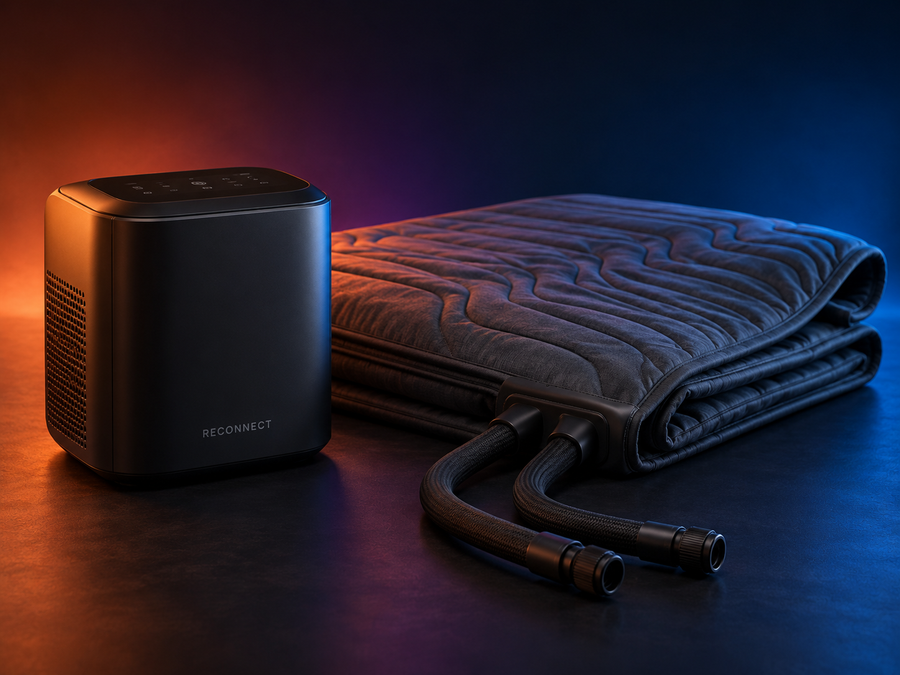
Active bed cooling works best when it has time to change the temperature of the sleep surface before bedtime. With RECONNECT, starting the Control Unit around 30 to 60 minutes before bed gives the circulating water and Mattress Pad time to approach your setting.
5. Keep the Control Unit ventilated
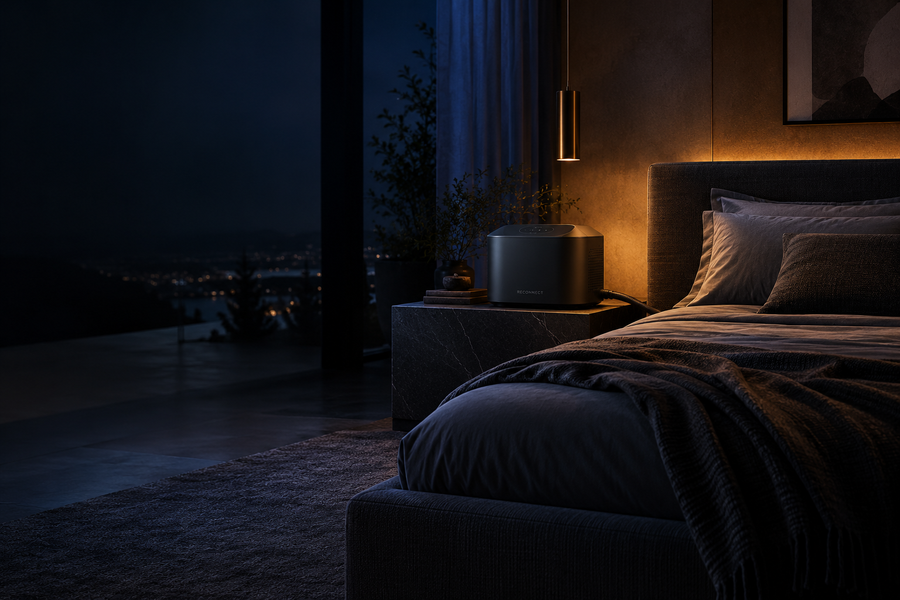
Any active cooling system has to move heat somewhere. Keep RECONNECT on a firm, dry, level surface with at least 6 in (15 cm) of clear space around the Unit and keep the vents unobstructed.
Cooling the room vs cooling the bed
Air conditioning and a cooling mattress pad solve different parts of the same problem.
| Question | Air conditioning | Active bed cooling |
|---|---|---|
| What does it cool? | The whole room | The sleep surface |
| Helps with room humidity? | Yes, depending on the HVAC system | No |
| Can two sleepers choose different settings? | No | Yes, with a dual-zone system |
| Targets mattress heat directly? | Indirectly | Yes |
| Best use | Setting the room baseline | Fine-tuning the bed |
For a deeper comparison, read cooling mattress pad vs air conditioning.
How a water-based bed cooling system works
RECONNECT uses temperature-controlled water circulating through a low-profile Mattress Pad beneath the fitted sheet. Cooling water settings run from 54 to 95°F (12 to 35°C).
Those numbers are water settings, not guaranteed mattress-surface temperatures. Room temperature, bedding, mattress construction and airflow all affect what you actually feel.
What if you share the bed?
Hot climates can make different temperature preferences even more obvious. One person may want stronger cooling while the other is already comfortable.
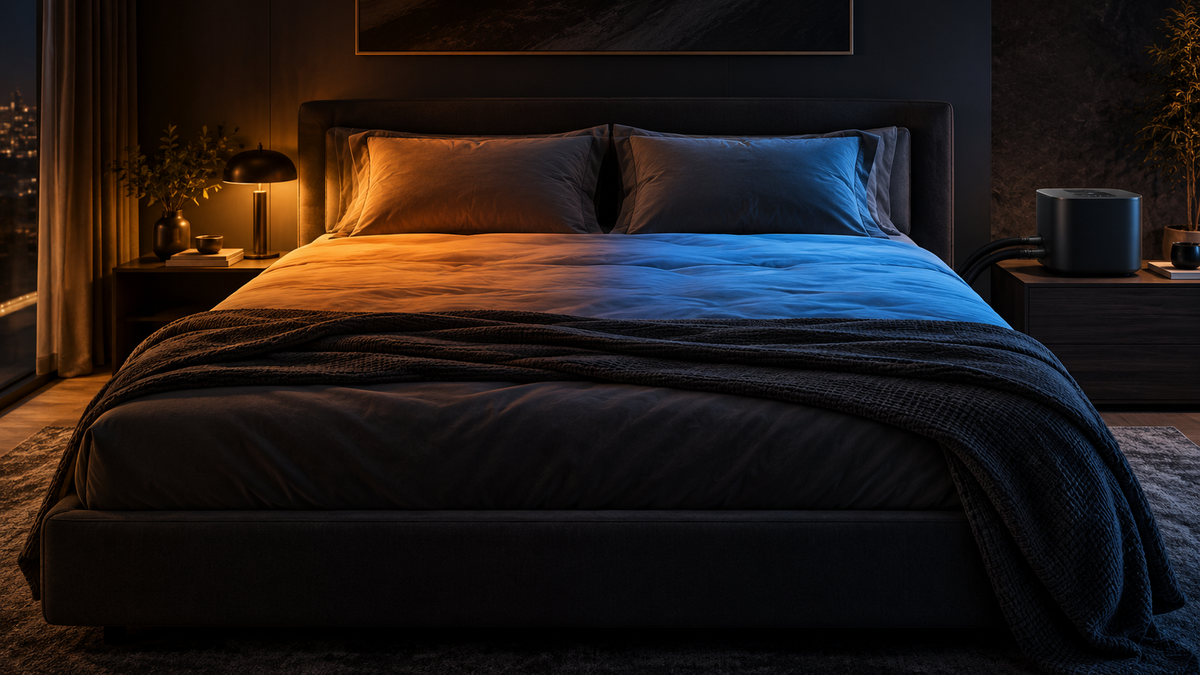
RECONNECT is dual-zone on both Queen and King. Each side can have its own water-temperature setting, or either side can be switched off independently. Both zones operate in the same overall mode, so both cooling or both heating.
Can a bed cooling system replace AC in Arizona or Nevada?
Not in an extremely hot bedroom. RECONNECT is designed to fine-tune the bed, not to make an overheated room safe or comfortable on its own.
A better approach is:
- use air conditioning or another room-cooling method to create a reasonable bedroom temperature
- keep direct sun and daytime heat out of the room where possible
- use lighter bedding
- then use targeted bed cooling to adjust the sleep surface itself
What about dry desert heat vs humid heat?
Hot, dry climates and hot, humid climates can both make sleep uncomfortable, but humidity changes how the body loses heat and how bedding feels. Air conditioning or dehumidification can be especially useful where humidity is high.
With any water-based bed cooling system, very cold settings in a humid room can also contribute to condensation. If bedding feels damp only during aggressive cooling, raise the setting and reduce room humidity where practical.
A practical hot-weather routine
- Close curtains or blinds during the hottest part of the day.
- Cool the bedroom to a comfortable baseline before bedtime.
- Use light, breathable sheets and bedding.
- Start RECONNECT 30 to 60 minutes before bed.
- Begin with a moderate cooling setting and adjust gradually.
- Keep the Control Unit well ventilated and the tubing free from kinks.
The bottom line
If you live in a hot climate, the most effective strategy is usually not room cooling or bed cooling. It is using each for the job it does best.
Set a comfortable room baseline, then fine-tune the surface you actually sleep on.
Next: read how to sleep cooler at night, see our cooling guide, or learn how RECONNECT works.