Menopause, Hot Flashes and Sleep Temperature
Hot flashes and night sweats can disrupt sleep during menopause. Learn practical temperature and bedding strategies, plus where active bed cooling fits.

Hot flashes and night sweats can make sleep unpredictable during perimenopause and menopause. One minute the bed feels comfortable. The next, heat and sweating can wake you up.
Important. RECONNECT is a comfort product, not a medical device. Bed temperature control may make the sleep environment feel more comfortable, but it does not treat menopause or the underlying cause of hot flashes.
Why menopause can affect sleep temperature
The Menopause Society says hot flashes and night sweats, also called vasomotor symptoms, are among the most common symptoms of the menopause transition. Up to 80% of women may experience them, and individual hot flashes often last around 1 to 5 minutes.
Night sweats are hot flashes that occur during sleep. They can wake you, leave bedding damp and sometimes be followed by chills as the body cools afterward.
The goal is flexibility, not simply colder
Because a hot flash can be followed by feeling cool, an extremely cold bedroom is not always the most comfortable answer. A more flexible sleep environment can be useful.
Practical ways to make the bed more comfortable
Use layers you can move easily
Choose lighter blankets or separate layers instead of one very heavy duvet. That makes it easier to uncover and recover without fully waking.
Choose breathable bedding
Lightweight cotton, linen and similar fabrics can help heat and moisture escape more easily than dense, heavily insulating layers.
Keep the bedroom at a comfortable baseline
A fan or air conditioning can help keep the room from becoming hot or humid. You do not necessarily need to make the entire bedroom extremely cold.
Think about the surface beneath you
If the mattress surface holds heat, changing only the air in the room may not solve the feeling of warmth directly underneath your body.
Where active bed cooling fits
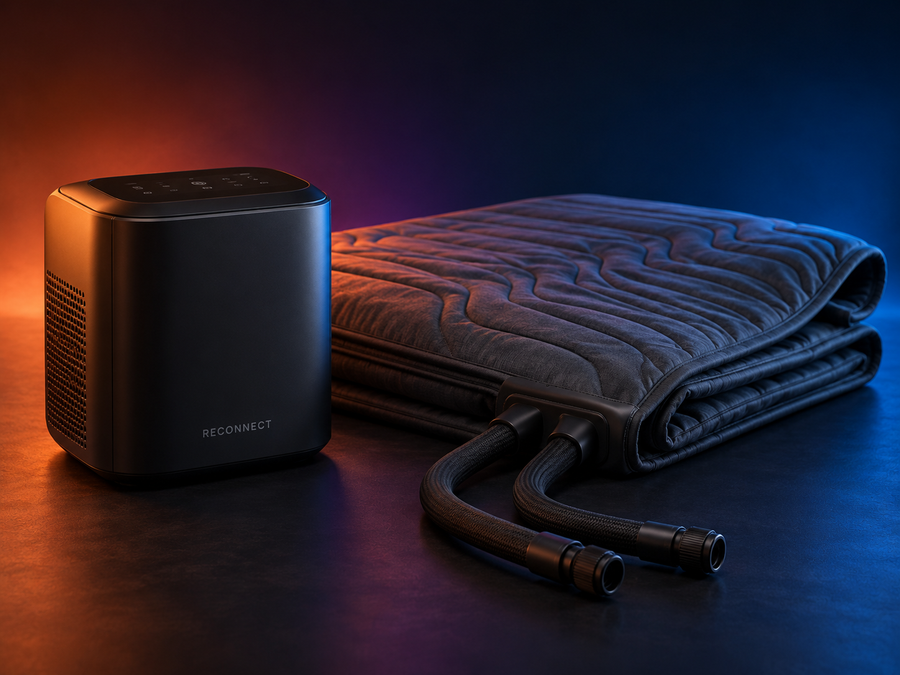
RECONNECT circulates temperature-controlled water through a low-profile Mattress Pad beneath the fitted sheet. That lets you adjust the bed surface without replacing the mattress.
Cooling water settings run from 54 to 95°F (12 to 35°C), while heating settings run from 77 to 131°F (25 to 55°C). These are circulating-water settings. The temperature felt at the mattress surface varies with the room, mattress and bedding.
Why dual-zone can matter during menopause
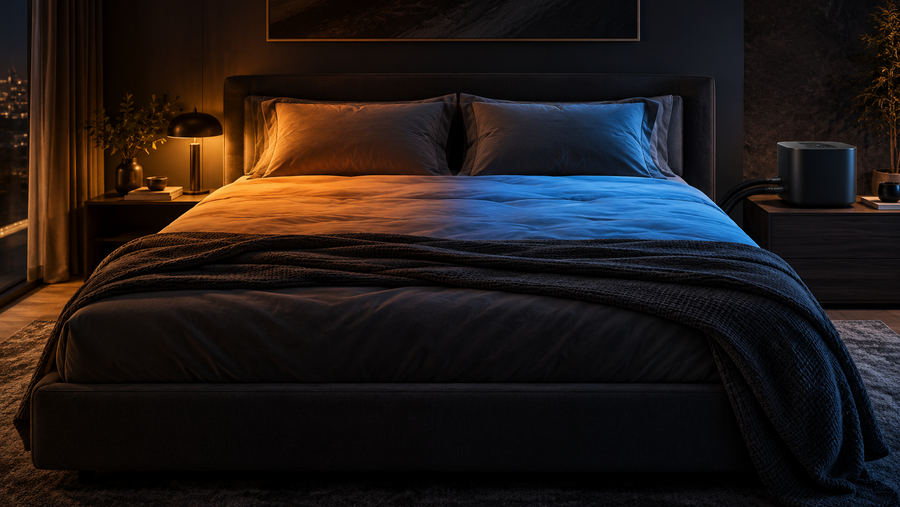
If one sleeper wants a cooler bed and their partner does not, lowering the room thermostat can create a new problem. RECONNECT is dual-zone on both Queen and King, so each sleeper can choose a different setting while sharing one bed.
Both zones must be in the same overall mode, cooling or heating, and we recommend keeping the two settings within 14°F (8°C) of each other.
Can Smart Rhythms help?
Smart Rhythms is a preset nine-hour temperature programme built into the Control Unit. It changes the water setting automatically through the night without using sensors, sleep tracking or an app.
It is not designed to detect a hot flash or react to your body. Think of it as scheduled temperature changes rather than medical or biometric automation.
What RECONNECT cannot claim
- It does not treat hot flashes or menopause.
- It does not measure hormones or body temperature.
- It does not detect when a hot flash begins.
- It does not replace medical advice or treatment.
That distinction matters. A cooler or more adjustable bed may improve comfort, but menopause symptoms can have effective medical treatment options that should be discussed with a healthcare professional.
When to ask for medical help
If hot flashes or night sweats are significantly affecting your sleep or daily life, talk to a healthcare professional. The Menopause Society notes that prescription hormone therapy and nonhormone treatments are available for bothersome vasomotor symptoms, depending on the individual.
A calmer bedroom strategy
- Keep the room comfortable rather than excessively cold.
- Use light, removable bedding layers.
- Choose breathable sleepwear and sheets.
- Keep water nearby if sweating wakes you.
- Use targeted bed cooling if the mattress surface feels too warm.
- Talk to a healthcare professional about persistent or disruptive symptoms.
Related reading: night sweats and sleep, how to sleep cooler, and how RECONNECT works.