Night Sweats and Sleep: When Cooling the Bed Helps
Night sweats are not always the same as sleeping hot. Learn the difference, practical cooling steps, and when repeated drenching sweats should be checked.

Waking up sweaty can mean your bedroom is too warm, your duvet is too heavy, or your body is reacting to something else entirely. The phrase night sweats is often used loosely, but medically it means more than simply feeling hot in bed.
Important. Bed cooling can make the sleep environment more comfortable. It does not diagnose or treat the underlying cause of night sweats.
Sleeping hot vs night sweats
The NHS describes true night sweats as sweating enough to soak nightclothes or bedding even though the place you are sleeping is cool. By contrast, sweating because the bedroom is warm or the bedding is too heavy can simply be overheating.
That distinction matters because the solution is different.
Common reasons people wake up hot
- a warm or humid bedroom
- heavy duvets, blankets or heat-retaining bedding
- alcohol or some medications
- anxiety or stress
- menopause-related hot flashes
- other medical conditions
Sometimes the cause of night sweats is not obvious.
Start with the sleep environment
Use lighter bedding
Swap one heavy layer for several lighter ones. That makes it easier to change warmth through the night.
Keep the room comfortable
Ventilation, a fan or air conditioning can help if the bedroom itself is warm or humid.
Choose breathable fabrics
Light cotton, linen and similar breathable fabrics can help heat and moisture escape more easily than dense, heavily insulating layers.
Cool the mattress surface
If the room feels fine but the surface beneath you remains hot, an active bed cooling system can target that part of the sleep environment directly.
How a water-based bed cooling system fits in
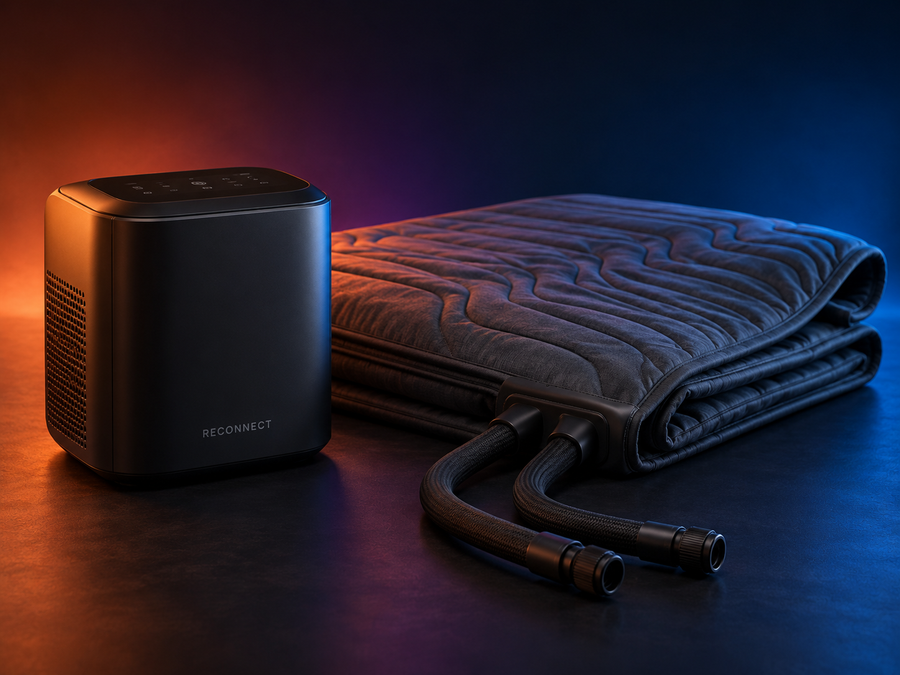
RECONNECT circulates temperature-controlled water through a low-profile Mattress Pad beneath the fitted sheet. It is designed to change the temperature of the bed surface rather than cool the whole bedroom.
Cooling water settings run from 54 to 95°F (12 to 35°C). Those are water settings, not guaranteed mattress-surface temperatures. Room temperature, humidity, bedding and the mattress all affect what you feel.
What bed cooling cannot do
A cooler bed can address comfort. It cannot determine why you are sweating, stop a medical hot flash from occurring, or replace treatment for an underlying condition.
Water-based systems also do not actively dry sweat the way moving air can. If moisture itself is the main problem, airflow, breathable bedding and room humidity may matter just as much as surface temperature.
When should you talk to a doctor?
The NHS recommends seeing a GP if you regularly have night sweats that wake or worry you, especially if they happen alongside symptoms such as a high temperature, cough, diarrhoea or unexplained weight loss.
Mayo Clinic similarly advises medical review when night sweats are regular, interrupt sleep or occur with other concerning symptoms.
Night sweats during menopause
Menopause is a common cause of night sweats. The Menopause Society describes hot flashes and night sweats as vasomotor symptoms and notes that they can contribute to sleep disruption.
If that is relevant to you, read our separate guide to menopause, hot flashes and sleep temperature. It covers comfort measures while keeping medical treatment separate from product claims.
A practical checklist for tonight
- Lower the room temperature if it is warm.
- Use lighter, breathable bedding.
- Keep a dry change of sleepwear nearby if episodes are disruptive.
- Try airflow if moisture is the main problem.
- Consider surface cooling if the mattress itself feels hot.
- Seek medical advice for regular, unexplained or drenching night sweats.
For more practical steps, read how to sleep cooler at night or compare bed cooling with air conditioning.