Water vs Air Bed Cooling: Which Type Is Right for You?
Water and air bed cooling solve heat in different ways. Compare surface cooling, airflow, moisture, setup, maintenance, dual-zone control and comfort.
Active bed cooling systems generally use one of two approaches: water or air. Both can make a hot bed more comfortable, but the experience is different.
Short version. Air-based systems move air through or around the bedding. Water-based systems circulate temperature-controlled water through a Pad beneath you. Choose based on the sensation you prefer, the upkeep you accept and the level of temperature control you want.
How air bed cooling works
Air-based systems use a fan or blower to move air under the covers or through purpose-designed bedding. You feel the effect as airflow around the body.
Why people choose air
- the cooling sensation can be noticeable quickly
- moving air can help evaporate moisture and sweat
- there is no water reservoir to refill
- some systems do not add a Pad beneath the fitted sheet
What to consider
- you may feel the airflow directly
- fan speed and bedding affect the experience
- dual-zone setups vary by brand
- air temperature is strongly tied to room conditions
How water bed cooling works
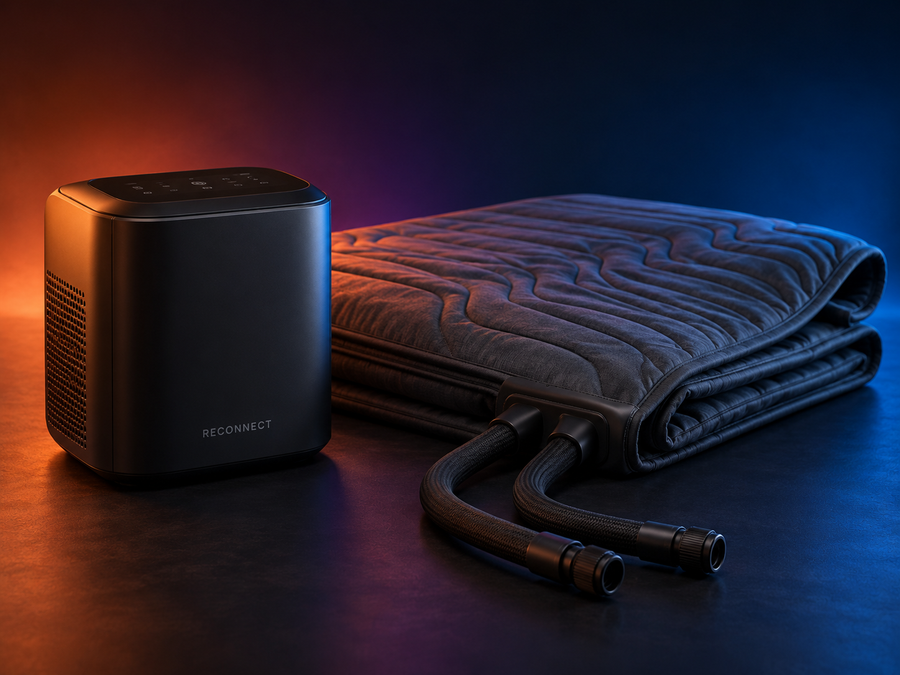
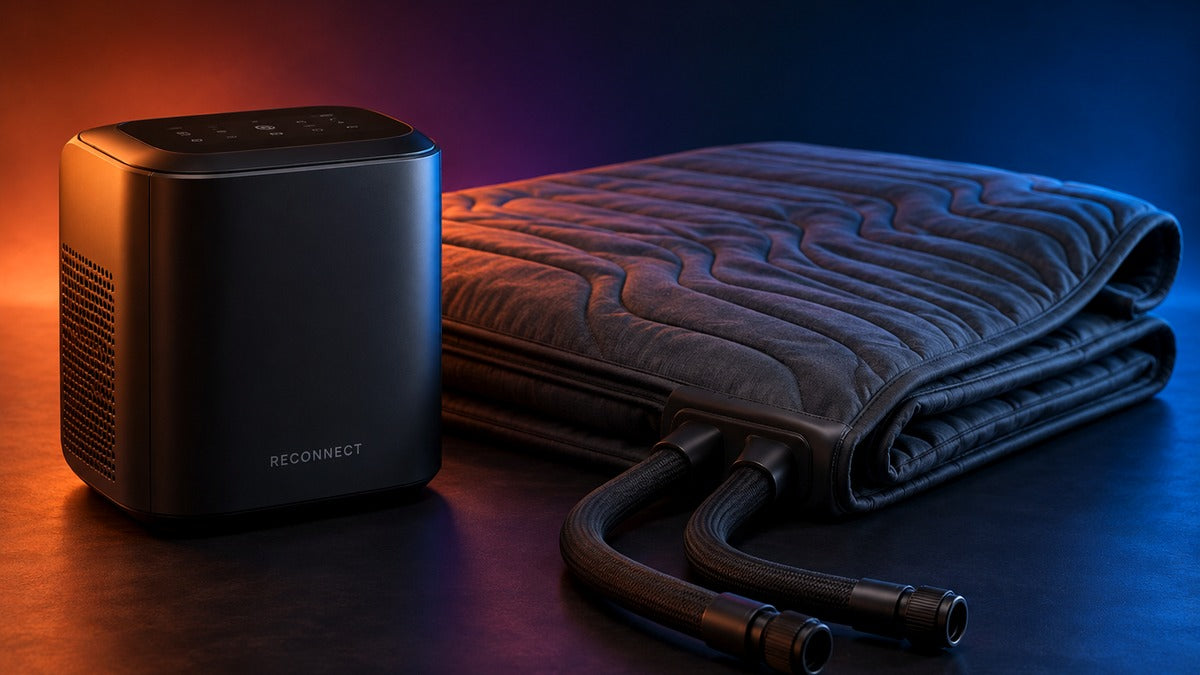
A water-based system uses a Control Unit to cool or warm water and circulate it through fine channels in a Mattress Pad. The water continuously returns to the Unit and moves around the loop again.
Instead of creating a breeze, the aim is to change the temperature of the surface beneath the sleeper.
Why people choose water
- direct surface cooling and heating
- no airflow across the face or body
- precise water-temperature settings
- dual-zone systems can give two sleepers different settings
What to consider
- the reservoir needs water and occasional top-ups
- the Pad adds a thin layer to the mattress
- very cool settings can contribute to condensation in some room conditions
- it takes time for the water and bed surface to approach the chosen setting
Water vs air: the practical differences
| Factor | Air-based | Water-based |
|---|---|---|
| Main sensation | Moving air | Cooled or warmed surface |
| Moisture removal | Airflow can help evaporation | Does not actively dry the bedding |
| Heating | Depends on the product | Common in active water systems |
| Water maintenance | None | Reservoir top-ups and care |
| Pad beneath sheet | Not always | Usually |
| Dual-zone | Varies | Varies by system |
What does RECONNECT use?
RECONNECT is water-based. The Control Unit circulates water through a 0.8 in (2 cm) Mattress Pad beneath the fitted sheet.
- Cooling water settings: 54 to 95°F (12 to 35°C)
- Heating water settings: 77 to 131°F (25 to 55°C)
- Queen and King: dual-zone
- Noise: rated under 38 dBA
- Water top-up: typically every two to three months after setup
Those temperature figures are water settings. The mattress surface will vary with room temperature, bedding and the mattress itself.
What about sweat and night sweats?
Airflow has a natural advantage when the main problem is moisture because moving air can help evaporation. A water system focuses on temperature, not drying the bedding.
If you experience genuine drenching night sweats rather than simply sleeping warm, the cause can be medical. Read our guide to night sweats and bed cooling and speak to a healthcare professional if they are regular or unexplained.
Which should you choose?
Choose air if you like a breeze, want moisture movement and prefer avoiding water maintenance. Choose water if you prefer the mattress surface itself to be actively cooled or heated and do not want airflow over your body.
There is no universal winner. The better technology is the one that matches the sensation and maintenance you are comfortable living with every night.
See how RECONNECT works or compare RECONNECT, Chilipad and Eight Sleep.
Further reading
Competitor claims are linked for context. BedJet is not affiliated with or endorsed by RECONNECT.